

How to Play Duck Duck Goose (Active Circle Game for Ages 3–8)
Inside: An inclusive, energetic movement game ideal for preschool, kindergarten and early primary classrooms – great for building social, listening, turn‑taking and gross motor skills.
I cannot even imagine how many hundreds of times I have played the popular group game of Duck Duck Goose with groups of young children in school, kindergarten, preschool, and even child care. It certainly is an Australian classic!
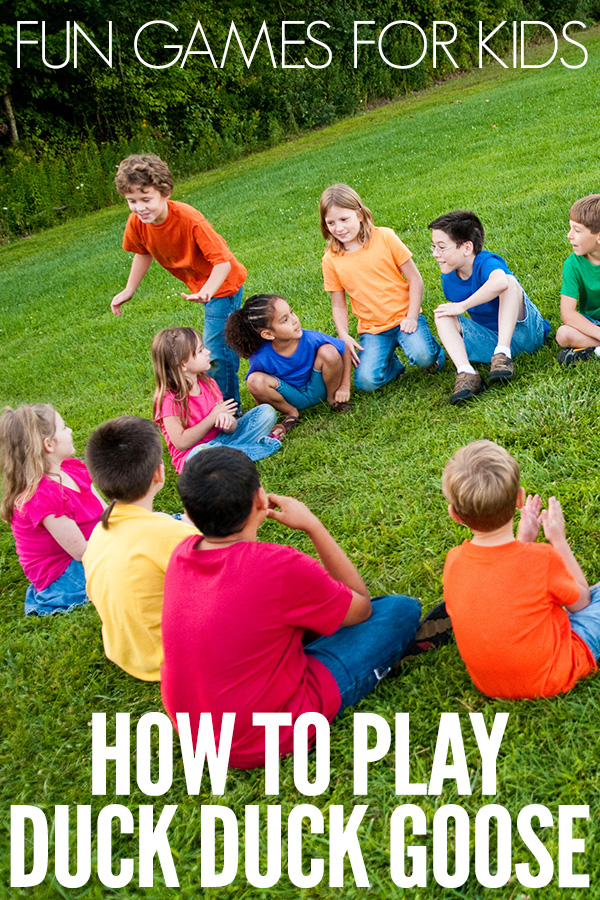
Game Snapshot: Duck Duck Goose
Age: 3–8 years
Number of players: 5+ players
Space needed: A flat space – grass, game court, playground, hall
Equipment: None
Skills: Listening & attention, turn‑taking, decision‑making, co-ordination, agility
Learning outcomes:
- Builds social skills (turn taking, cheering on peers)
- Develops decision‑making (choosing who to tag)
- Practices gross motor movement (running, stopping, agility)
- Encourages inclusive participation and following group rules
How to Play
1. Form a circle:
Students sit in a circle on the floor or ground, facing inward.
2. Select “It”:
Choose one child to be “It.” This player will walk around the outside of the seated circle.
3. Walk and name:
“It” walks around the circle, gently tapping each player’s shoulder and saying “Duck” with each tap.
4. Choose the “Goose”:
When “It” is ready, they tap a child’s shoulder, saying this time, “Goose!” That chosen child stands up to chase “It” around the outside of the circle.
5. The chase:
“It” runs around the circle attempting to sit in the now vacant spot before being tagged.
- If the Goose is not able to tag It, then Goose becomes It (the previous It returning to the game as a general player in their new circle spot) and the game continues as per the previous steps.
- If the Goose does tag It, the tagged player sits in the middle of the circle and Goose becomes It for the next round. The player remains in the middle of the circle until the next time a Goose is tagged to replace them
6. Repeat: Continue the game with new children taking turns to be “It.”
Classroom Variations & Tips
- Indoor Friendly Version: If space is limited, ask children to walk or march around the circle instead of running.
- Learning Through Language: Use alternative words instead of “Duck/Goose” to practice vocabulary or curriculum themes (e.g. apple/banana for fruit words). This turns movement into meaningful language play
- Rotate roles regularly so every child has a chance to be “It” and “Goose.”
What Children Learn
Beyond giggles and movement, Duck Duck Goose helps children:
- Practice listening and turn‑taking
- Build confidence and risk‑taking in safe play
- Strengthen motor skills through controlled running and stopping
- Group participation and positive social skills
Play More Classic Games
Love Duck Duck Goose? Continue the fun with other active, outdoor group games perfect for preschool and early elementary/primary students with What’s the Time, Mr Wolf?, Red Light, Green Light and Scarecrow Tag.
Or explore all of our classic outdoor games for 3-8 year olds here.

Oh I remember this from when I was a child. There have been a few things that have resurfaced from my childhood lately and I am loving the trip down memory lane
There is a Pakistani version of this game too!! In Urdu 🙂
I love that the same games are played by children all around the world 🙂